Today, we commemorate 78 years since the Palestinian Nakba (“catastrophe”), in which three-quarters of the indigenous Palestinian population was forced from their homes to create the settler-colony of Israel, and 78 years of ongoing nakbat (“catastrophes”). It has become even clearer the past two and a half years of ongoing genocide in Gaza that the Nakba was not an isolated event, but rather an ongoing tragedy that the Palestinian people have been living through for more than three quarters of a century.
For 42 years, I lived in Dheisheh Refugee Camp near Bethlehem. Palestinians who have lived in the camps don’t need a special day to remember or be reminded of Nakba: the Nakba rests deep inside us. It is part of who we are. When I was a child, the Nakba was present in every aspect of our daily life: the tents, the muddy, narrow alleys, the tiny United Nations rooms, the collective punishment, the fences and walls, the checkpoints. Waiting in line to use the bathroom, waiting in line to get food parcels from the United Nations, and, of course, waiting to return back to our villages. Yes, the Nakba is a part of who we are.
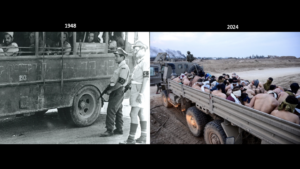
1948: Palestinians forced from their homes. Hebrew writing on the bus says “To Gaza.”
2024: Palestinians rounded up in Gaza, stripped, blindfolded, and taken away.
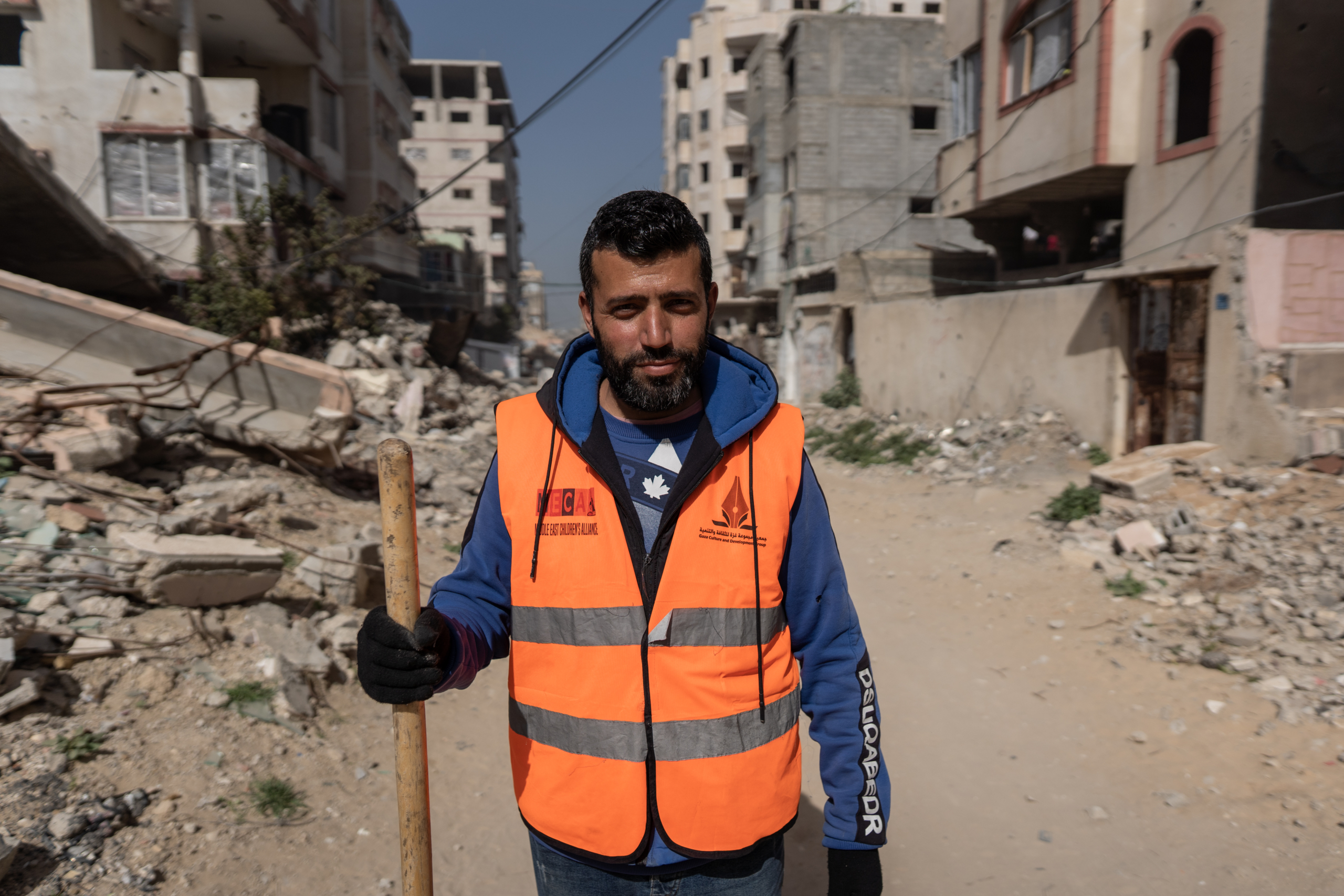
Palestinians in Gaza today are living the accumulation of all 78 years of Nakba by Israeli settler colonialism. We are witnessing genocide, but we are also learning something about the strength in collective purpose. Every aspect of Palestinians’ daily life in Gaza educates us about human survival and steadfastness. There are over two million people displaced in Gaza right now. And in each tent, no matter how many times they have been displaced, there are families who return over and over again to their destroyed homes, determined to remain steadfast on their land.
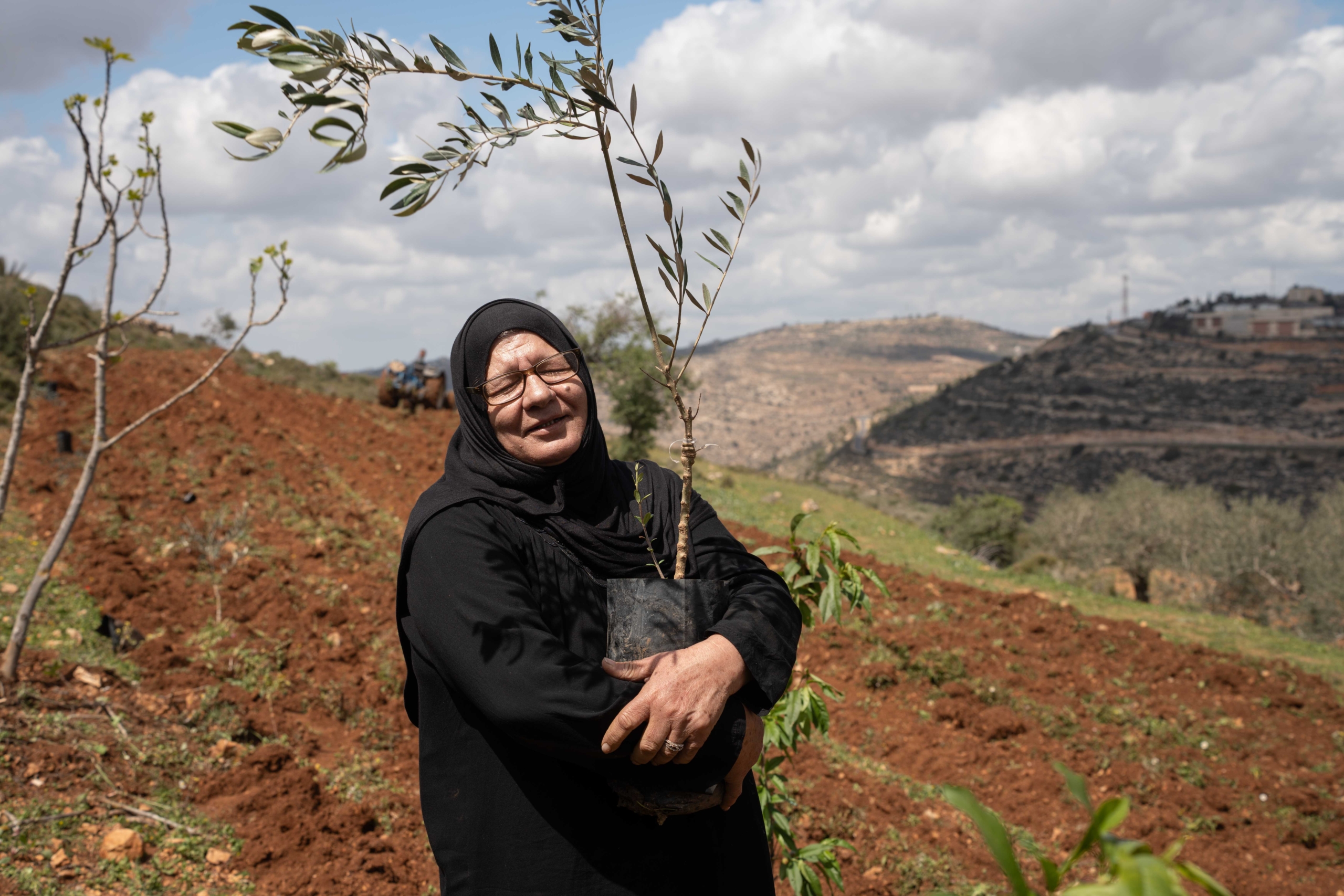
In fact, throughout Palestine, today there is an ongoing, daily Nakba. In the West Bank, Israeli settlers, organized into gangs and supported by the military, are attacking and occupying farms, schools, and homes while confiscating more land; indiscriminately killing Palestinian men, women, and children. Since October 2023, more than 30,000 refugees from three camps in the West Bank: Jenin, Nur Shams, and Tulkarem have been displaced as most of their camps are destroyed. And 900 checkpoints and gates, keeping children from their schools, farmers from their fields, patients from the hospital. In Lebanon, there are Lebanese and Palestinian refugees who have been displaced many times as a result of the escalating Israeli attacks over the last few years.
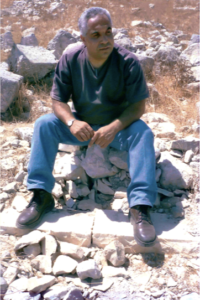
The front steps of Zeiad’s mother’s house in the village Jarash, outside of Jerusalem. The whole village was destroyed after it was ethnically cleansed during the Nakba and it is now a nature reserve.
Commemorating the Nakba is a time for Palestinians everywhere -in Gaza; in refugee camps in the West Bank, Lebanon and Jordan; in 48 Palestine; in the diaspora – to honor their struggle, their martyrs, strengthen their sumud, their hope for the future. Now, in the face of the ongoing genocide in Gaza, tens of millions of peoples around the world join in commemorating the Nakba, including you as you take action and stand in solidarity with Palestine.
We have done so much, and yet it is not enough. We must use the lessons we have learned from the people in Gaza as our compass to take more action and do everything in our power to stop this genocide. The solution to the Palestinian cause is very clear – it takes us straight back to the Nakba. The fact that Palestinian refugees still hold the keys of their destroyed houses represents their commitment to return to their homes and their land. This is the only possible road to Palestinian freedom.
Palestinian refugees hate refugee camps, including me. No power in this world can erase the horrific memories that live inside of every refugee. While we hate the camps, we love the collective spirit of the people inside the camps. We grew up with this spirit. It shaped who we are and we breathe it every day. This spirit leads us as we further our struggle to return back to our homes and villages. It sustains our people in Gaza and throughout Palestine. This is why, no matter the extremism of Israeli settler colonialism and its supporters, they will never be able to take this spirit away from us. Generation after generation, from 1948 until we return together to a free Palestine.